
THIS IS NOT A MODIFICATION
Peabody has stated in the Response to Submissions Report (RtS) March 2026:
Approval would ‘support the continuation of ROM coal extraction and employment levels while WCPL evaluates opportunities to develop a future Wilpinjong Coal Mine State Significant Development (SSD) extension proposal’
The RtS validates the concerns raised in submissions and confirms that Peabody is planning a continued expansion. This expansion is not possible without the current proposal.
Next steps:
The Department of Planning is now reviewing Peabody's Response to Submissions Report for Mod 3, lodged in March. Mod 3 remains in the planning process, with Peabody yet to respond to agency advice on the project's impacts
Issues not addressed:
- The lack of any monitoring of current groundwater levels in the area of impact and upstream flows in Wollar Creek. Baseline monitoring data is essential information to understand the extent of likely impacts. This proposed mine expansion heads towards Wollar Creek. All necessary information must be collected before a decision can be made.
- The social and amenity impacts will be significantly high. The assessment of increased noise and poor air quality on the Wollar Hall and Recreation Ground was not done. Neither was there an assessment on the three blocks in the village now owned by the Mudgee Local Aboriginal Lands Council.
- The proposal to extend open cut mining operations to the boundary of Wollar Village has not been adequately assessed and the impacts of this on the local community has been downplayed.
- The cumulative loss of endangered bushland and rocky outcrops providing roosting, breeding and feeding sources for a range of species threatened with extinction has not been assessed.
- The Aboriginal Cultural Heritage assessment was very poorly conducted. The Wollar region is highly significant for the Wiradjuri Nation
- Climate change impacts on the local area have been extreme including dangerous bushfires, road destroying floods and intensive drought. Any additional Greenhouse Gas emissions will intensify the environmental, social and economic impacts on the region.
- All proposed monitoring for additional mitigation measures must be conducted prior to a final decision.
Key Problems with Mod 3 expansion
Some key concerns that the proposal will:
- This extension is the first stage of a much larger expansion of Pit 9 & Pit 10, as detailed by Peabody themselves.
- Disturb an additional 155 ha of important biodiversity habitat values and farming land.
- Bring open cut mining operations right up to the edge of Wollar Village.
- Generate an additional 25 million tonnes of greenhouse gases into the atmosphere at a time when the world is already overheating and impacted by increasingly violent extreme weather events.
- Permanently alter flows to Wollar Creek and destroy groundwater systems.
- Continue to disturb Aboriginal cultural heritage and the connection to country.
The assessment of environmental impacts is very poor and does not:
- Fully recognise the extent of cumulative loss of habitat, especially for the Koala, Large-eared Pied Bat and Regent Honeyeater.
- Adequately assess ongoing impacts on Wollar Creek and supporting groundwater systems.
- Recognise the ongoing social and health impacts through increased noise, dust, blasting, lights of 24 hour mining operations to the edge of Wollar Village.
- Identify the regional employment opportunities available through the rapid implementation of the Central West Orana Renewable Energy Zone.
Agency Advice
1. Biodiversity Assessment:
Recommendations require the Biodiversity Development Assessment Report (BDAR) to be updated. There are four species listed as entities with Serious and Irreversible Impacts:
- Box Gum Woodland critically endangered ecological community (CEEC)
- Regent Honeyeater critically endangered
- Large-eared Pied Bat (Vulnerable) and Eastern Cave Bat
The indirect impacts of blasting, noise, dust and lighting on microbat habitat are poorly assessed. A 100m buffer from escarpment habitat is advised.
Groundwater monitoring and cumulative impact assessment on National Park estate is inadequate.
2. Water Assessment:
Water agency advice calls for a more precautionary approach to protect water resources, significantly improved monitoring to detect impacts, and full compliance with water licensing regulations before the project can proceed
This includes a 150m buffer from the open cut pit to protect the highly productive Wollar Creek alluvium (connected groundwater).
- The monitoring of surface flows and groundwater needs to be extended to verify impact predictions and detect potential changes.
- All maximum water captured in dams, pits and final voids needs to be assessed against current held water access licences.
- Water quality performance targets need to be updated with the inclusion of trace elements such as arsenic, selenium and molybdenum.
3. Cultural Heritage Assessment:
- The Aboriginal Cultural Heritage Assessment Report (ACHAR) does not provide sufficient information.
- Additional archaeological and environmental background assessment is required.
- Inadequate predictive modelling, survey coverage, sampling strategy and test excavations in the disturbance area.
- Poor documentation of consultation with Aboriginal community.
- The disturbance of Aboriginal cultural heritage is not considered to be minor, as stated by the proponent.
4. IESC Water Science Advice:
The federal Independent Expert Scientific Committee (IESC) found Peabody has not adequately characterised surface and groundwater resources to assess the project's water impacts.
- Groundwater-surface water connectivity is inadequately and contradictorily characterised in Peabody's own assessment documents.
- Cumulative impacts on Wollar Creek, Wilpinjong Creek and downstream ecosystems — including the Goulburn River National Park — have not been assessed.
- No new groundwater monitoring is proposed despite mining extending into previously unmined areas adjacent to Wollar Creek.
- Impacts to groundwater-dependent ecosystems cannot be adequately assessed on the basis of a single stygofauna survey conducted in 2022.
Wilpinjong Modification 3 - Extension of Pit 8
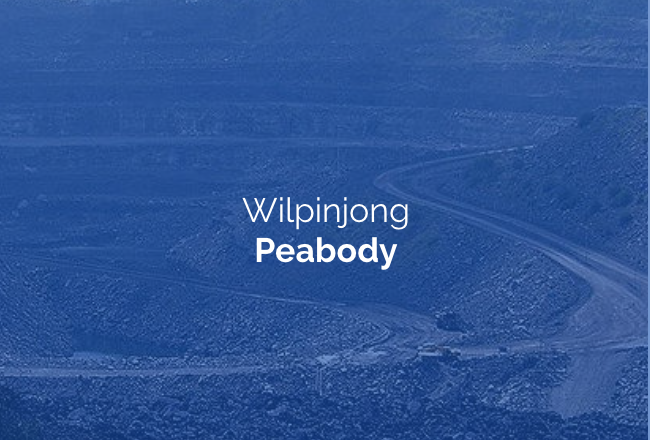
Mod 3 – Pit 8 extension will disturb 155 ha to extract a further 14 million tonnes of coal and extend the life of mine by six months to June 2034.
This project will bring the opencut coal mine to the Wollar Village boundary, will significantly impact two critically endangered ecological communities and eleven endangered fauna species while increasing the loss of flows to Wollar and Wilpinjong Creeks.
The project has been referred to the Federal Government under the Environment Protection and Biodiversity Conservation Act 1999 (EPBC Act) because it will impact threatened species and water sources.
The referral documents are here.
Proposed Mod 3 – Pit 8 extension lies mostly outside the current approved mine boundary. This raises serious concerns about how the proposal has been assessed. Instead of being treated as a new project requiring a full Environmental Impact Statement and independent scrutiny, the expansion has been lodged as a modification to the existing mine. Under NSW planning rules, modifications must be “substantially the same” as the approved project — a test that many believe is not met when new pits and infrastructure extend well beyond the original approved mine boundaries.
A modification assessment is not determined by the Independent Planning Commission but can be approved by Planning Department staff through the Minister’s delegate. Modification approvals cannot be tested for their merit through the NSW Land and Environment Court. This removes public rights.
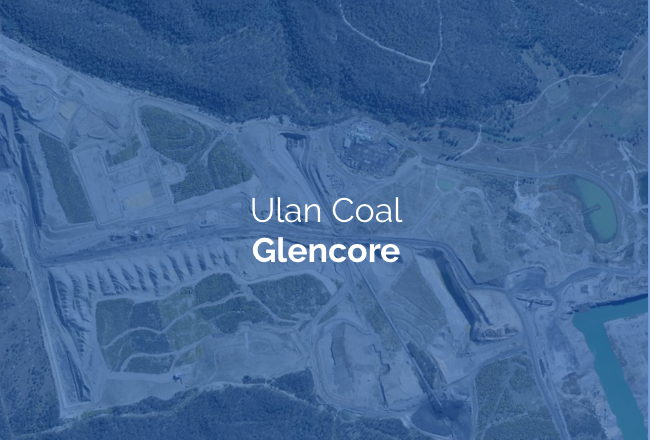
Similar issues have arisen with other coal companies in NSW. Both Glencore and Peabody have sought to extend their mines far beyond existing boundaries, yet their proposals are still being processed as modifications. This practice reduces the level of public scrutiny and independent assessment, despite the significant new impacts these expansions create.

High density of microbat population potentially pushout of disturbed mine land in the region

Local Mines